AI and response
ProblemAI should reduce repetitive work and improve response speed. Start hereUse AI for repeatable work, not every decision
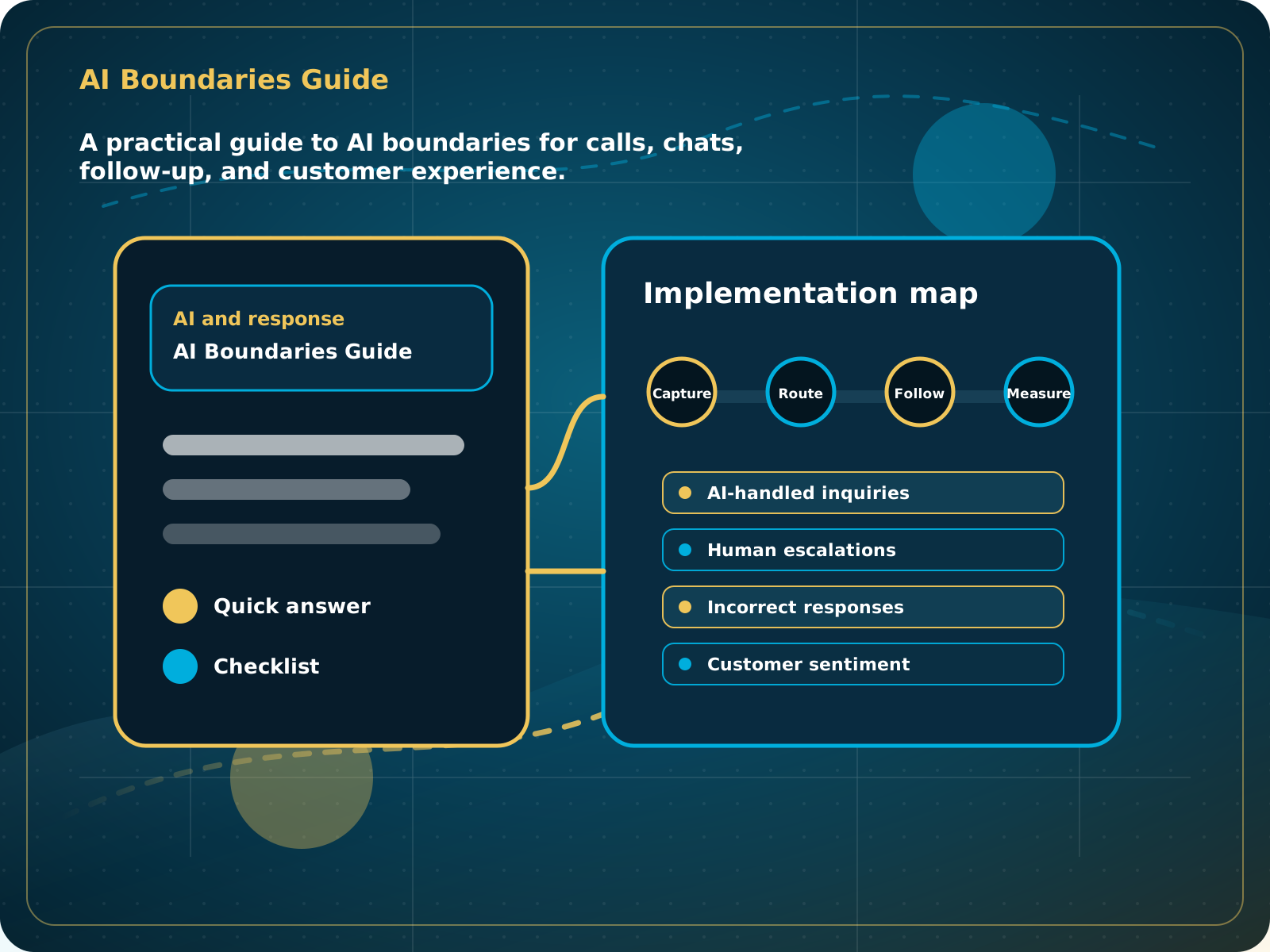
AI Boundaries Guide
A practical guide to AI boundaries for calls, chats, follow-up, and customer experience.
Leads capturedConnected
AI responseConnected
Reviews requestedConnected
Follow-up sentConnected
What AI Should and Should Not Handle
AI handles predictable front-desk tasks, staff handle exceptions, and customers are not forced into the wrong path.
Practical starting point
1List predictable tasks 2List human-only situations 3Set confidence boundaries 4Limit promises and transactions
Use AI for repeatable work, not every decision
The safest role is first response, information capture, common questions, routing, reminders, and booking direction. Human judgment still matters for sensitive, unusual, emotional, or high-risk situations.
Identify questions and actions that have a clear approved answer or rule.
Mark complaints, emergencies, pricing exceptions, legal or medical issues, sensitive information, and relationship-heavy conversations for escalation.
When the AI does not know, it should say so, capture the question, and hand the issue to the right person.
Only allow booking, invoicing, payment, or account changes when the workflow is approved, tested, and appropriate for the plan.
A practical guide to AI boundaries for calls, chats, follow-up, and customer experience.
Quick answer: AI should handle repeatable first-response tasks. Humans should handle sensitive, complex, high-risk, or relationship-heavy conversations.
What to know first
AI should reduce repetitive work and improve response speed. It should not take over sensitive conversations, complex judgment calls, or anything that needs a human relationship.
Keep this checklist nearby
- Let AI answer common FAQs
- Let AI capture basic lead details
- Let AI send booking links where appropriate
- Escalate pricing exceptions, complaints, sensitive details, and urgent edge cases
- Review AI conversations regularly
Step by step
Put this into practice.
Use the steps in order the first time. Once the process is working, keep the parts your business actually needs and review them on a simple schedule.
List predictable tasks
Identify questions and actions that have a clear approved answer or rule.
List human-only situations
Mark complaints, emergencies, pricing exceptions, legal or medical issues, sensitive information, and relationship-heavy conversations for escalation.
Set confidence boundaries
When the AI does not know, it should say so, capture the question, and hand the issue to the right person.
Limit promises and transactions
Only allow booking, invoicing, payment, or account changes when the workflow is approved, tested, and appropriate for the plan.
Tell customers what happens next
Set realistic expectations for transfer, callback, booking confirmation, or staff review.
Review conversations regularly
Look for wrong answers, poor handoffs, repeated questions, and customer frustration. Update the knowledge and rules from evidence.
Common mistakes to avoid
- Using AI as a replacement for judgment
- No compliance boundaries
- No customer experience review
- No human handoff
What to measure
- AI-handled inquiries
- Human escalations
- Incorrect responses
- Customer sentiment
- Resolution time
When this is working
AI handles predictable front-desk tasks, staff handle exceptions, and customers are not forced into the wrong path.
How Lead Media Solutions connects this
AI Receptionist can be configured with role boundaries, FAQs, transfer logic, and testing scenarios.
LMS configures AI Receptionist around approved business facts and handoff rules. The AI supports staff instead of pretending every conversation should be automated.
Best next step
AI Receptionist should be configured with clear guardrails and escalation rules.
Related starting points
Choose the offer by the actual problem.
AI Receptionist
The business has a response-speed problem.
Test the AIFoundation System
The business has a trust and social proof problem.
Start Foundation SystemBusiness Essentials
The business needs the core operating system.
See Business EssentialsBusiness Essentials
Start with the 15+ page CRM-connected website inside Business Essentials.
Build the Core SystemGuide FAQ
Answer-focused summary.
What is the main point of the What AI Should and Should Not Handle?
AI should handle repeatable first-response tasks. Humans should handle sensitive, complex, high-risk, or relationship-heavy conversations.
Where should I start?
The safest role is first response, information capture, common questions, routing, reminders, and booking direction. Human judgment still matters for sensitive, unusual, emotional, or high-risk situations.
Can Lead Media Solutions help implement this?
Yes. LMS configures AI Receptionist around approved business facts and handoff rules. The AI supports staff instead of pretending every conversation should be automated.
Where can active LMS clients get platform instructions?
Use the Lead Media Solutions Help Center for current button-by-button platform walkthroughs. This guide explains the business process and best-practice setup around those tools.