CRM and follow-up
ProblemMost lead leakage happens after the first inquiry. Start hereAudit the real lead path, not the one you hope is happening
Follow-Up Audit
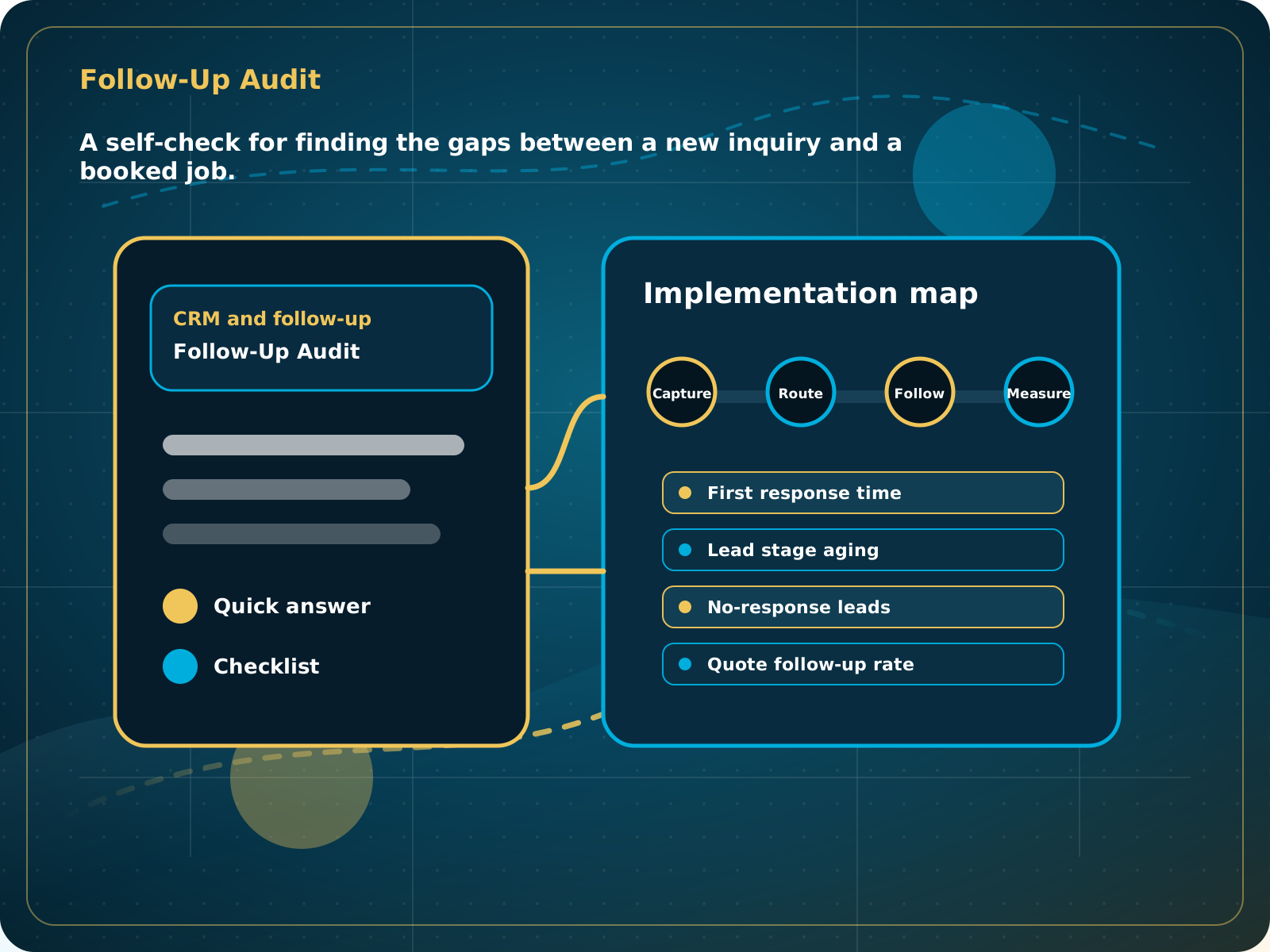
A self-check for finding the gaps between a new inquiry and a booked job.
Leads capturedConnected
AI responseConnected
Reviews requestedConnected
Follow-up sentConnected
Local Business Follow-Up Audit
Every inquiry has an owner, a visible stage, a next step, and a follow-up path that does not rely on memory.
Practical starting point
1List every lead source 2Check first response 3Review CRM capture 4Inspect each pipeline stage
Audit the real lead path, not the one you hope is happening
Use a recent week of calls, forms, messages, quote requests, and bookings. Follow each one from first contact to the current outcome and note every place the next step depended on memory.
Include phone, website forms, chat, Google, Facebook, referrals, booking links, email, and any paid channel.
Record how quickly each source receives a response, who owns it, and what happens after hours or when the team is busy.
Confirm each inquiry creates or updates the right contact and opportunity without making unnecessary duplicates.
Every stage should have a clear meaning, owner, exit condition, and next action. Remove stages nobody understands or uses.
A self-check for finding the gaps between a new inquiry and a booked job.
Quick answer: A follow-up audit maps what happens after a call, form, chat, DM, quote request, missed call, and completed job. Any step without ownership is a leak.
What to know first
Most lead leakage happens after the first inquiry. A follow-up audit exposes where calls, forms, DMs, quotes, and old leads stop moving.
Keep this checklist nearby
- List every lead source
- Document the first response
- Check response time and handoff rules
- Review pipeline stages
- Review quote, booking, review, and reactivation follow-up
Step by step
Put this into practice.
Use the steps in order the first time. Once the process is working, keep the parts your business actually needs and review them on a simple schedule.
List every lead source
Include phone, website forms, chat, Google, Facebook, referrals, booking links, email, and any paid channel.
Check first response
Record how quickly each source receives a response, who owns it, and what happens after hours or when the team is busy.
Review CRM capture
Confirm each inquiry creates or updates the right contact and opportunity without making unnecessary duplicates.
Inspect each pipeline stage
Every stage should have a clear meaning, owner, exit condition, and next action. Remove stages nobody understands or uses.
Check quotes and no-response leads
Find sent quotes, missed appointments, open estimates, and old leads with no recent task or message.
Check post-job follow-up
Review payment, review requests, referrals, repeat-service reminders, and reactivation paths.
Fix one leak at a time
Start with the gap costing the most real opportunities. Build the rule, test it, and measure it before adding more automation.
Common mistakes to avoid
- Assuming staff remembers everything
- No shared pipeline
- No reminders for old leads
- No tracking from inquiry to booked job
What to measure
- First response time
- Lead stage aging
- No-response leads
- Quote follow-up rate
- Booked appointment rate
When this is working
Every inquiry has an owner, a visible stage, a next step, and a follow-up path that does not rely on memory.
How Lead Media Solutions connects this
Business Essentials is the core fix because it gives the business CRM, pipeline, conversations, tasks, and automations.
Business Essentials is designed for this full lead path. Active clients can use the LMS Help Center for deeper CRM, pipeline, conversation, and automation instructions.
Best next step
Business Essentials is usually the right fix when follow-up is scattered.
Related starting points
Choose the offer by the actual problem.
AI Receptionist
The business has a response-speed problem.
Test the AIFoundation System
The business has a trust and social proof problem.
Start Foundation SystemBusiness Essentials
The business needs the core operating system.
See Business EssentialsBusiness Essentials
Start with the 15+ page CRM-connected website inside Business Essentials.
Build the Core SystemGuide FAQ
Answer-focused summary.
What is the main point of the Local Business Follow-Up Audit?
A follow-up audit maps what happens after a call, form, chat, DM, quote request, missed call, and completed job. Any step without ownership is a leak.
Where should I start?
Use a recent week of calls, forms, messages, quote requests, and bookings. Follow each one from first contact to the current outcome and note every place the next step depended on memory.
Can Lead Media Solutions help implement this?
Yes. Business Essentials is designed for this full lead path. Active clients can use the LMS Help Center for deeper CRM, pipeline, conversation, and automation instructions.
Where can active LMS clients get platform instructions?
Use the Lead Media Solutions Help Center for current button-by-button platform walkthroughs. This guide explains the business process and best-practice setup around those tools.